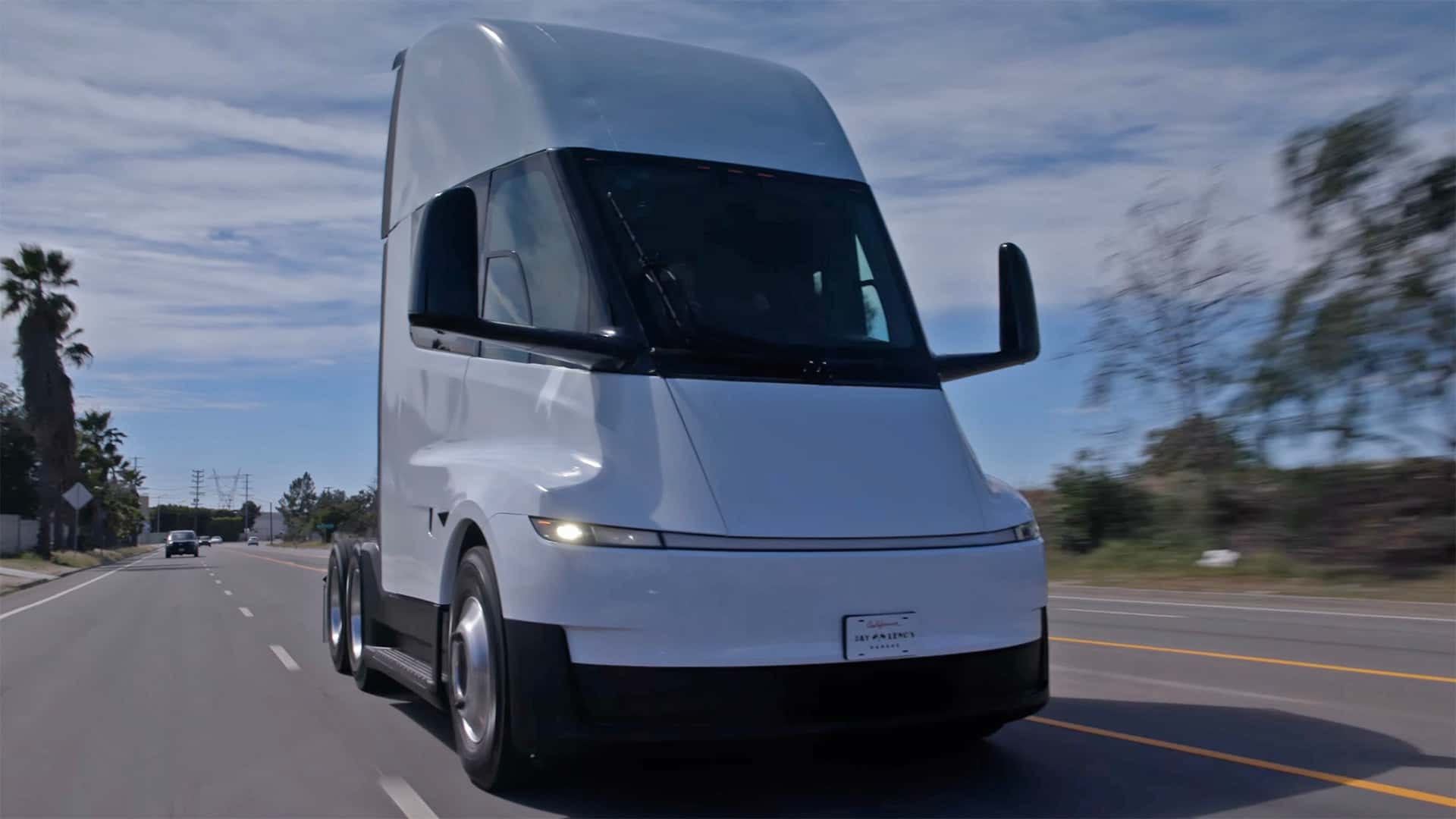
Jay Leno Highlights Tesla Semi's Cost Efficiency Over Range
Updated March 28, 2026
Jay Leno recently discussed the Tesla Semi, emphasizing that its most significant advantage lies not in its impressive 500-mile range but in its lower running costs. This perspective suggests that the economic benefits of operating the electric truck may drive its popularity among fleet operators and businesses looking to reduce expenses.
Share this story
Why it matters
- ✓Lower running costs can make electric trucks more appealing to businesses, potentially accelerating the adoption of EVs in commercial sectors.
- ✓Understanding the economic advantages of EVs like the Tesla Semi can help buyers make informed decisions based on total cost of ownership rather than just range.
Jay Leno's Take on the Tesla Semi
Jay Leno, the well-known comedian and automotive enthusiast, recently shared his insights on the Tesla Semi, an electric truck that has garnered significant attention since its announcement. While the Tesla Semi boasts an impressive range of up to 500 miles on a single charge, Leno argues that the truck's most compelling advantage is its lower running costs.
The Importance of Running Costs
In the world of commercial trucking, operational expenses play a crucial role in determining the viability of a vehicle. Leno believes that the Tesla Semi's reduced running costs will make it an attractive option for fleet operators. This perspective is particularly relevant as businesses increasingly seek ways to cut costs and improve efficiency.
Electric vehicles, including the Tesla Semi, typically have lower maintenance costs compared to their diesel counterparts. They benefit from fewer moving parts, which translates to less wear and tear and lower maintenance needs. Additionally, the cost of electricity is generally lower than diesel fuel, further enhancing the economic appeal of electric trucks.
Range vs. Cost: A Shift in Priorities
Traditionally, range has been a significant concern for buyers considering electric vehicles. The fear of running out of battery power—often referred to as "range anxiety"—has been a barrier to widespread adoption. However, Leno's comments suggest a shift in priorities, where running costs take precedence over range for many potential buyers.
This shift could indicate a broader trend in the EV market, where businesses prioritize total cost of ownership over single-charge range. Fleet operators, who often have fixed routes and predictable driving patterns, may find that the Tesla Semi's range is more than sufficient for their needs, allowing them to focus on the economic benefits of operating an electric truck.
Implications for EV Buyers and Owners
For potential buyers and current owners of electric vehicles, Leno's insights highlight the importance of considering total cost of ownership when evaluating EV options. Here are a few key implications:
- Cost Savings: Businesses and fleet operators can benefit from lower fuel and maintenance costs, making electric trucks like the Tesla Semi a financially sound investment.
- Adoption of EVs: As more companies recognize the economic advantages of electric trucks, we may see an acceleration in the adoption of EVs in the commercial sector, leading to a more sustainable transportation industry.
- Market Dynamics: A focus on running costs may encourage manufacturers to prioritize cost efficiency in their electric vehicle designs, potentially leading to innovations that further reduce operational expenses.
Conclusion
Jay Leno's perspective on the Tesla Semi underscores a critical aspect of the electric vehicle market: the importance of running costs. While range remains a vital consideration, the economic benefits of operating electric trucks may ultimately drive their popularity among businesses. As the industry evolves, understanding these factors will be essential for buyers and owners looking to navigate the changing landscape of electric vehicles.
Sources
Comments
Log in with
Loading comments…