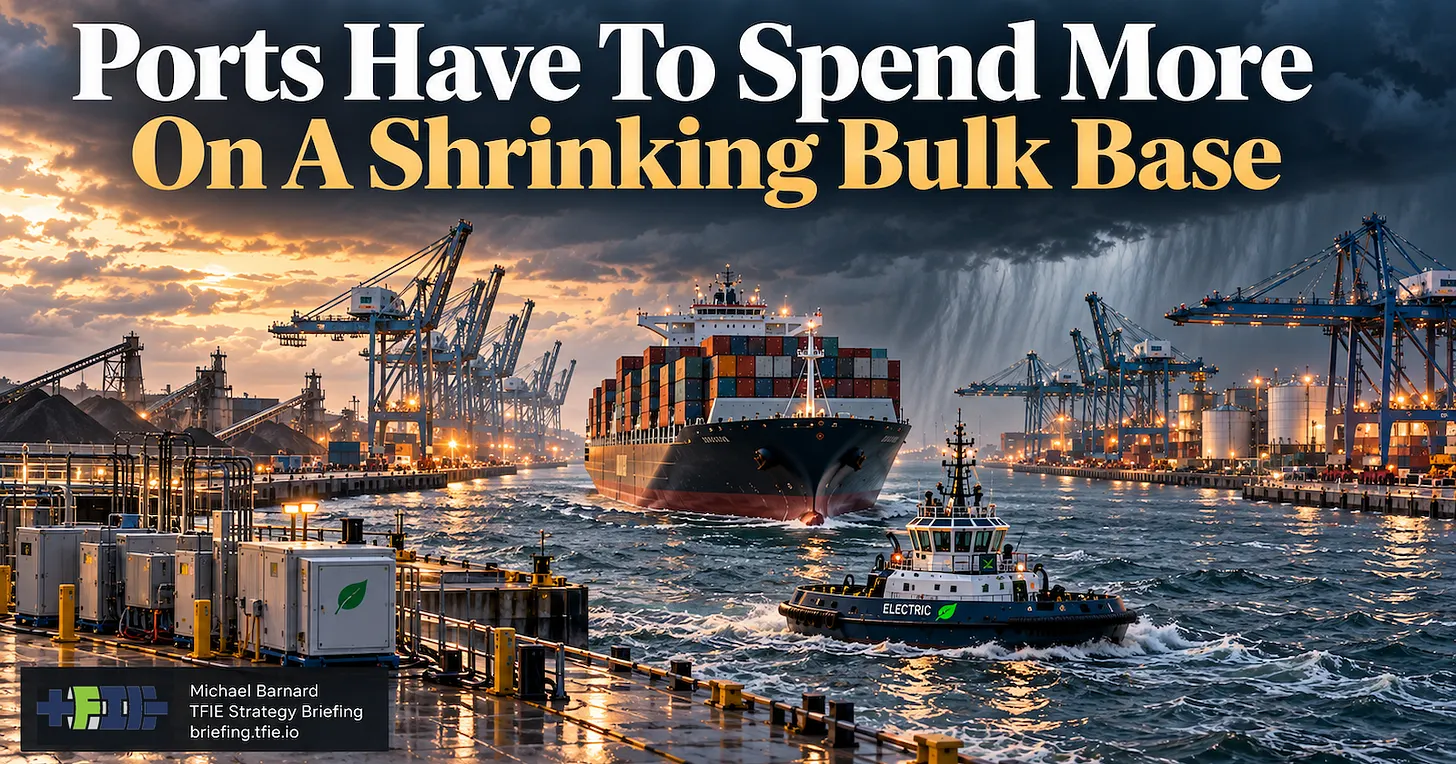
Ports Face Capital Challenges as Bulk Cargo Demand Declines

Edited by Ionna Brakeley
Charging & Ownership
Updated September 27, 2026
3 min read
1 linked source
Ports are experiencing a significant shift as their bulk cargo base shrinks, prompting a need for increased capital investment in infrastructure. This change affects port operations and logistics, as larger ships require deeper channels and more advanced equipment. The evolving landscape raises uncertainties about future port capabilities and their ability to adapt to new demands.
Share this story
Why it matters
- ✓Changes in port infrastructure could impact the cost and availability of EV-related goods, affecting overall pricing for consumers.
- ✓As ports adapt to larger vessels, there may be delays or disruptions in the supply chain that could influence the availability of EVs and charging equipment.
- ✓Increased investment in port infrastructure may lead to higher operational costs, which could be passed on to consumers in the form of higher prices for EVs and related services.
Ports Face Capital Challenges as Bulk Cargo Demand Declines
Ports across the globe are grappling with a significant decline in their bulk cargo base, which is prompting calls for increased capital investment in infrastructure. As the shipping industry evolves, ports must make long-term infrastructure decisions that will last for decades, all while facing changing demands and expectations.
What Changed
The bulk cargo base at ports is shrinking, leading to a pressing need for modernization and expansion of infrastructure. Ships are becoming larger, necessitating deeper channels, more capable tug fleets, and larger cranes to accommodate these vessels. This shift is not just a minor adjustment; it represents a fundamental change in how ports operate and manage their resources.
According to a report from CleanTechnica, ports are being asked to make infrastructure decisions that will last thirty, forty, or even fifty years. However, the assumptions that previously justified their existing infrastructure are rapidly changing. This creates a challenging environment for port authorities as they strive to balance current needs with future demands.
Why It Matters for Buyers and Owners
The implications of these changes extend beyond the ports themselves and can significantly impact EV buyers and owners:
- Cost and Availability of Goods: As ports invest in new infrastructure to handle larger vessels, there may be increased costs associated with shipping and logistics. This could lead to higher prices for EVs and related products, impacting consumer affordability.
- Supply Chain Disruptions: The transition to larger ships and the necessary infrastructure upgrades may cause temporary disruptions in the supply chain. Such disruptions could affect the availability of EVs and charging equipment, making it more challenging for consumers to access these products.
- Operational Costs: Increased capital investment in port infrastructure may lead to higher operational costs for shipping companies. These costs could be passed on to consumers, resulting in higher prices for EVs and related services.
Key Details from Source Material
The CleanTechnica article highlights the urgent need for ports to adapt to the changing landscape of shipping and logistics. As bulk cargo demand declines, ports must consider the long-term implications of their infrastructure investments. The report emphasizes that the assumptions that once supported existing infrastructure are no longer valid, necessitating a reevaluation of port capabilities and future needs.
The article also points out that climate disruption is a factor that ports must contend with, further complicating their infrastructure planning. As environmental considerations become more prominent, ports will need to integrate sustainable practices into their operations, which may require additional investment.
What to Watch Next
As the situation develops, it will be important to monitor how ports respond to these challenges. Key areas to watch include:
- Investment Announcements: Keep an eye on announcements regarding capital investments in port infrastructure and how these investments will impact shipping costs and logistics.
- Supply Chain Developments: Watch for any disruptions in the supply chain that may arise from the transition to larger vessels and upgraded infrastructure.
- Environmental Regulations: Pay attention to how ports adapt to climate-related challenges and what measures they implement to ensure sustainable operations.
In conclusion, the shrinking bulk cargo base at ports presents significant challenges that could have far-reaching implications for EV buyers and owners. As ports navigate this transition, the impact on costs, availability, and supply chain efficiency will be critical to monitor.
Sources
These are the documents and reports used to build this brief so readers can verify the story directly.
- Ports Need More Capital As Their Bulk Cargo Base Shrinks — CleanTechnicaMEDIA
Reporting notes
EV Signal briefs are written to explain the verified change first, then add the context EV buyers and owners need to understand cost, availability, charging access, eligibility, or ownership impact.
If details are still developing, we try to say what is confirmed, what comes from secondary reporting, and what readers should verify before acting.
Source mix
1 linked source
1 media
Reviewed from: CleanTechnica.
Comments
Log in with
Loading comments…
More in Ownership

Philippines' Electric Vehicle Transition Must Align with ASEAN Initiatives
The Philippines is facing challenges in its electric vehicle (EV) transition, as local transport…
1h ago

Hallmark Introduces Keepsake Daytona Scat Pack for Christmas Trees
Hallmark has launched a new Keepsake ornament featuring the all-electric Dodge Charger Daytona Scat…
1h ago

Genesis GV90 Features Expanding Motorized Display for Enhanced Parking Experience
The Genesis GV90 introduces a unique motorized display that rises when the vehicle is parked,…
7h ago

Op-Ed Highlights America's Clean Tech Challenges Compared to China
A recent op-ed discusses the growing industrial gap between the U.S. and China in the clean…
13h ago