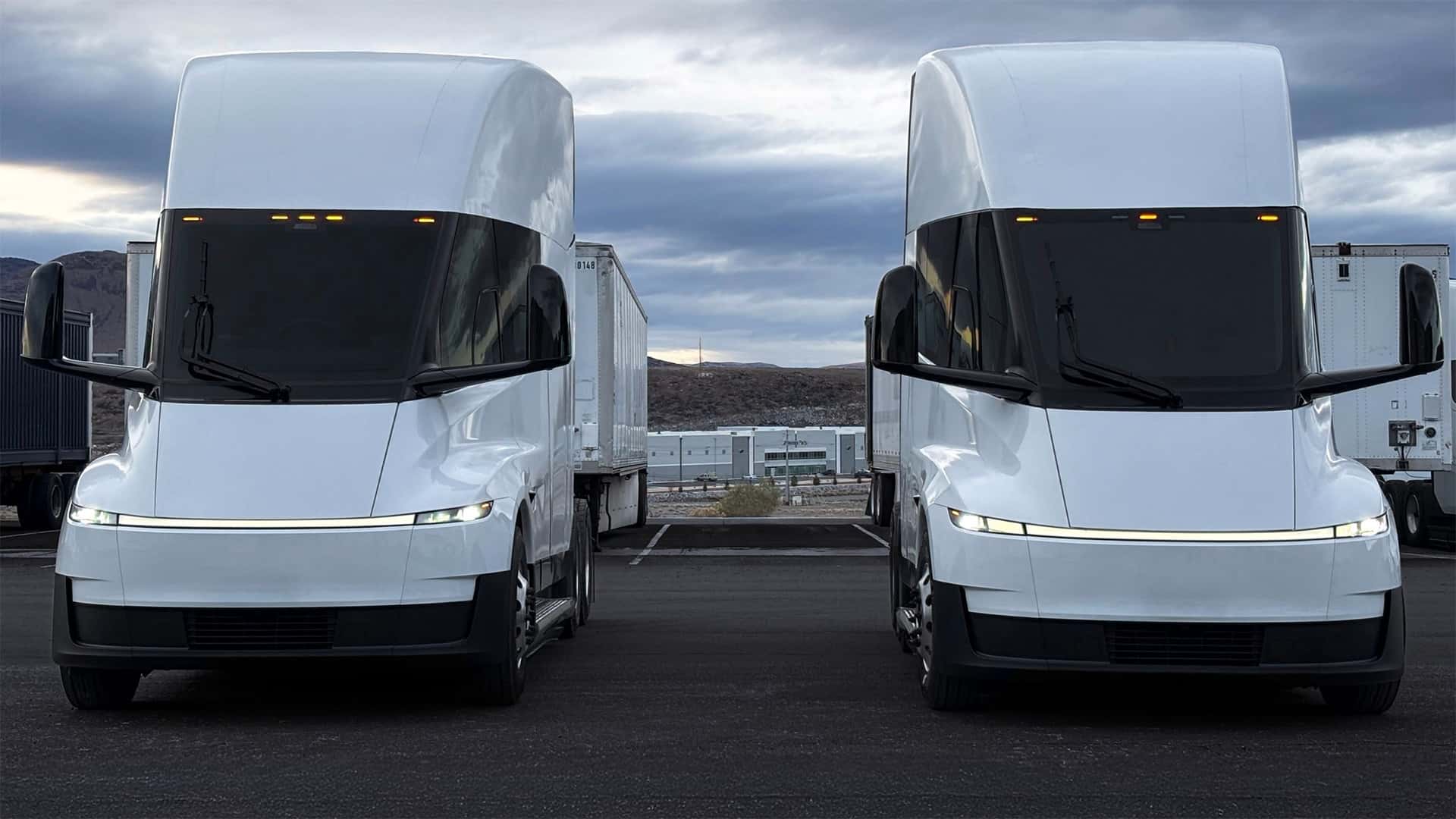
Tesla Semi May Feature Automated and Wireless Charging
Updated March 28, 2026
Tesla executives have hinted that the upcoming Tesla Semi could be equipped with automated and wireless charging capabilities. According to discussions with Jay Leno, the Semi might be able to initiate charging simply by driving over a designated charging pad in the future. This innovation could streamline the charging process for fleet operators and enhance the efficiency of electric truck operations.
Share this story
Why it matters
- ✓Automated charging could reduce downtime for fleet vehicles, allowing for more efficient operations.
- ✓Wireless charging technology may eliminate the need for physical charging cables, simplifying the charging process.
- ✓These advancements could make electric trucks more appealing to businesses considering a transition to electric fleets.
Tesla Semi May Feature Automated and Wireless Charging
Introduction
The Tesla Semi, an all-electric truck designed for freight transport, is on the verge of incorporating groundbreaking charging technology. Recent comments from Tesla executives during a conversation with Jay Leno suggest that the Semi could soon be capable of automated and wireless charging. This development could significantly enhance the operational efficiency of electric trucks, making them more attractive to fleet operators.
Automated Charging Capabilities
According to the executives, the Tesla Semi might be able to initiate a charging session simply by driving over a designated charging pad. This automated approach to charging could streamline the process, eliminating the need for drivers to manually connect cables or navigate charging stations. By reducing the time spent on charging, fleet operators could maximize their vehicle utilization and minimize downtime.
Wireless Charging Technology
The potential for wireless charging represents another leap forward in electric vehicle technology. If implemented, this feature would allow the Tesla Semi to charge without any physical connections, relying instead on electromagnetic fields to transfer energy from the charging pad to the vehicle. This technology not only simplifies the charging process but also enhances safety by reducing wear and tear on charging ports and cables.
Implications for Fleet Operators
The introduction of automated and wireless charging for the Tesla Semi could have several implications for electric vehicle (EV) buyers and owners, particularly those in the commercial sector:
- Increased Efficiency: Automated charging could lead to faster turnaround times for electric trucks, allowing fleets to operate more efficiently and respond to delivery demands more effectively.
- Reduced Complexity: Wireless charging systems could simplify the logistics of charging, making it easier for fleet managers to implement and maintain electric truck operations.
- Enhanced Adoption of Electric Fleets: As charging technology becomes more user-friendly and efficient, businesses may be more inclined to transition from traditional diesel trucks to electric alternatives, contributing to a broader shift toward sustainable transportation.
Conclusion
While details on the timeline and implementation of these features remain sparse, the prospect of automated and wireless charging for the Tesla Semi is an exciting development in the realm of electric vehicles. As Tesla continues to innovate and push the boundaries of EV technology, fleet operators and potential buyers should keep an eye on these advancements, which could redefine the landscape of electric trucking in the near future.
As the industry evolves, the integration of such technologies could play a crucial role in making electric trucks a viable option for more businesses, ultimately contributing to a greener and more sustainable future for transportation.
Sources
Comments
Log in with
Loading comments…